Hit a Pothole in Newbury? How to Claim Compensation and Report Road Damage
March 16, 2026
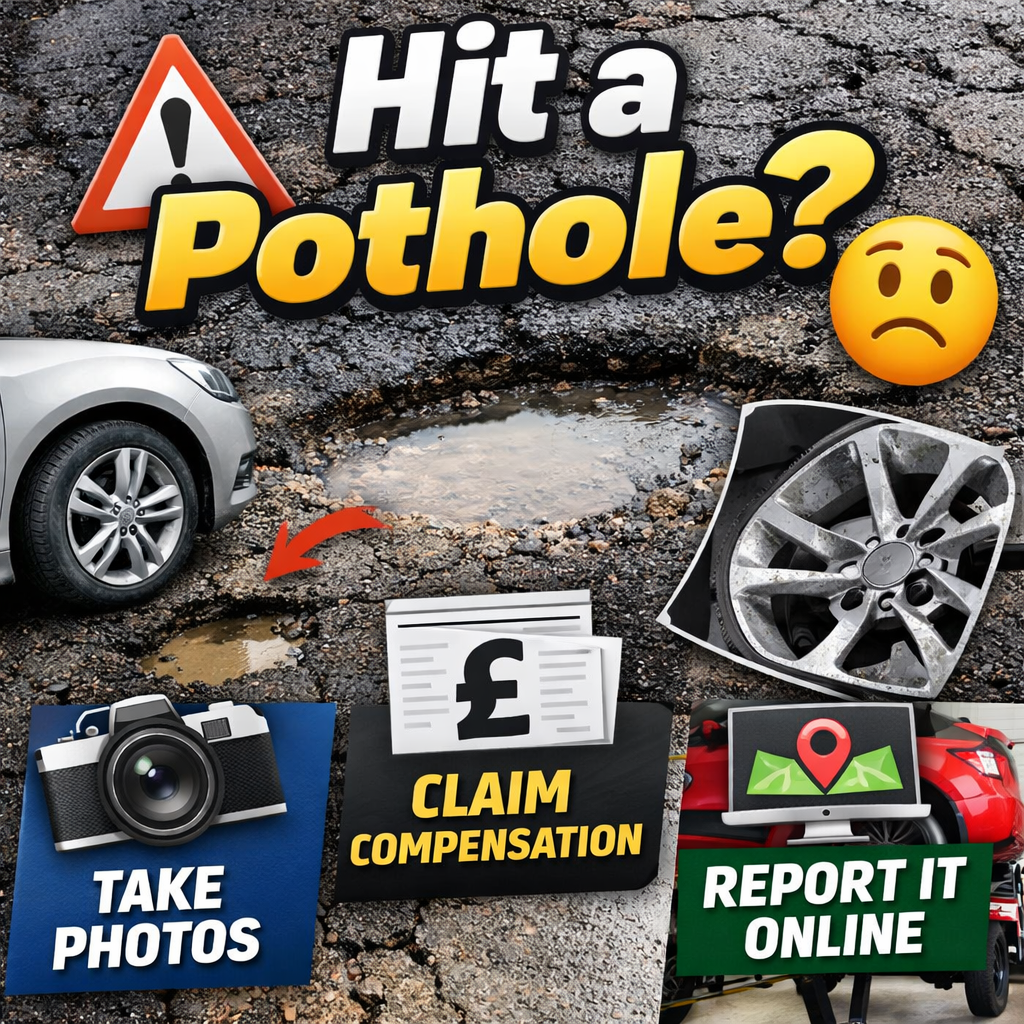
Potholes are one of the most common hazards on UK roads. After periods of heavy rain and freezing weather, road surfaces can quickly deteriorate and create dangerous holes.
For experienced drivers they can cause expensive repairs, and for learners currently taking driving lessons in Newbury, they are an important real-world hazard to recognise and avoid.
If you do hit a pothole and your car is damaged, acting quickly and collecting the right evidence can significantly improve your chances of claiming compensation.
📸 Take Photos Immediately
The most important step is to take photos at the scene straight away.
Councils often check the metadata in photos, which shows the date and time they were taken. If images are taken later or somewhere else, a claim may be rejected.
Make sure to photograph:
- Your car and the pothole in the same image
- The size and depth of the pothole
- Close-ups of any vehicle damage
Including the car in the photo helps prove exactly where the damage occurred.
🔧 Photograph the Damage
Once safe, take clear photos of the damage to your vehicle.
Common pothole damage includes:
- Tyre punctures
- Bent alloy wheels
- Suspension damage
- Wheel alignment issues
If the car goes to a garage, take a photo while the vehicle is on the ramp. This can provide strong evidence if the council questions your claim.
📍 Report the Pothole – Don’t Just Complain
Many drivers complain about potholes but never report them.
Don’t be one of those drivers. If potholes aren’t reported, councils may not know they exist.
Most local authorities now offer simple online reporting systems where you can:
- Mark the exact location on a map
- Upload photos or dashcam footage
- Describe the size or depth
In Newbury, road maintenance is managed by the Highways department at West Berkshire Council, who are responsible for maintaining local roads and signage.
In my opinion, their response and maintenance standards have improved significantly over the past few years, with many issues being repaired faster than before.
📏 What Actually Counts as a Pothole?
Councils don’t repair every small defect.
Most highway authorities prioritise potholes that:
- Exceed a minimum depth
- Have a defined or square edge
- Reach a certain width or diameter
This is why clear photos and accurate reporting are important.
🤖 AI May Help Fix Roads Faster
Some councils are now using AI road-scanning technology to detect road damage earlier.
These systems can measure:
- Pothole depth
- Crack length and width
- Areas where roads are starting to deteriorate
In the future this technology could help repair roads earlier, before potholes become severe.
👀 Why It Matters for Learner Drivers
During driving lessons in Newbury, learners are taught to scan the road ahead and spot hazards like potholes early
Many learners now choose automatic driving lessons in Newbury, allowing them to focus more on observation and road positioning rather than gear changes.
These skills are essential not just for passing the test, but for safe everyday driving.
✔️ Quick Summary
If you hit a pothole:
- Stop safely
- Take photos immediately 📸
- Photograph both the pothole and your car
- Capture clear images of the damage
- Report the pothole online 📍
- Keep repair invoices
Taking these steps can improve your chances of compensation and help get the road repaired for other drivers.For experienced drivers they can cause expensive repairs, and for learners currently taking driving lessons in Newbury, they are an important real-world hazard to recognise and avoid.
If you do hit a pothole and your car is damaged, acting quickly and collecting the right evidence can significantly improve your chances of claiming compensation.
Check Out this recent news story:
👉 https://www.bbc.co.uk/news/articles/c363yylxjrxo